
From Baric's blueprint to SV40 and back again
Synthetic biology, dual-use research, and the illusion of biodefense

Synopsis
Ralph Baric’s 2007 paper stands as a foundational reference in synthetic viral genomics, demonstrating how a SARS-like coronavirus could be de novo assembled from published sequence data alone. Framed as a risk assessment for synthetic biology in the context of biodefense, the paper provides a detailed technical roadmap for constructing infectious chimeric coronaviruses using seamless reverse-genetics techniques. This work exemplifies dual-use (civilian + military) research of concern: the very same tools developed for pandemic preparedness and biodefense can be readily applied to engineer viruses with enhanced pathogenicity, transmissibility, or immune evasion.
With the unexpected discovery of SV40 promoter-enhancer-origin sequences in the Pfizer COVID-19 mRNA injectable products, it becomes apparent how biodefense can become bioterrorism very quickly. These powerful mammalian regulatory elements, retained from a standard pcDNA3.1-type production plasmid, were never intended for human administration. Their detection in commercial vials links a synthetic biology framework directly to the manufacturing process of the “countermeasures” themselves - turning a theoretical dual-use discussion into a concrete, real-world example of how synthetic tools and legacy genetic elements entered hundreds of millions of people under the banner of biodefense.
Short summary of paper
Ralph S. Baric’s 2006 paper entitled: “Synthetic Viral Genomics: Risks and Benefits for Science and Society”1 reviews how synthetic genomics and reverse genetics has transformed virology, both for good and ill. It details the Baltimore classification of viruses and explains established reverse-genetics techniques → from infectious cDNA clones and bacterial artificial chromosome (BAC) vectors for large DNA viruses, to seamless assembly methods (ie: “No See’m2” sites using type IIS restriction enzymes) for RNA viruses like coronaviruses.
These tools have already enabled resurrection of extinct pathogens (ie: 1918 influenza) and construction of chimeric viruses, allowing precise manipulation of virulence, transmissibility, host range and immune evasion genes. Baric catalogs select agents across virus families, noting which are synthesizable from published sequences, and highlights barriers like sequence accuracy, genome stability in bacteria, and technical expertise - barriers he predicted would erode rapidly as DNA synthesis became cheaper and more accessible.
If you read the paper, you will have seen that it provides a detailed, practical framework for de novo synthesis and reverse genetics of SARS-CoV specifically, including seamless full-genome assembly, in vitro transcription to RNA, and recovery of infectious virus. The paper repeatedly notes that synthetic genomics allows reconstruction of viruses like SARS-CoV from sequence data alone, without needing the natural virus, and discusses how this could be used for both ‘legitimate’ research (vaccines, pathogenesis studies) and misuse.
In addition, the methods Baric outlines in the paper are directly applicable to SARS-CoV-2 (also ~30 kb), which is even more clearly laid out in Peter Daszak’s DEFUSE proposal: a collaborative how-to guide for “defusing bat-borne coronaviruses” (Figure 1). Post 2019 implementations have used yeast recombination, Gibson assembly, or similar seamless techniques, but the core principles (synthetic DNA fragments → full-length cDNA → RNA transcripts → infectious virus) are the same. As mentioned, Baric’s lab and collaborators had already demonstrated this for the original SARS-CoV in 2003.3

The COVID con: Biodefense or Biowarfare?
The paper is eerily prescient in terms of laying out the infrastructure for both “pandemic preparedness” and “dual-use” procedures. Synthetic approaches enabled rapid response: once a new pathogen’s sequence is known, genes or full genomes can be synthesized for diagnostics, vaccines and therapeutics, without waiting for natural isolates. This paradigm was used during SARS-CoV-2. We are all familiar with it. Considering the enormous damages done - not by the virus but by human-imposed “countermeasures”, this doesn’t seem like defense to me and it all leads back to Baric.4
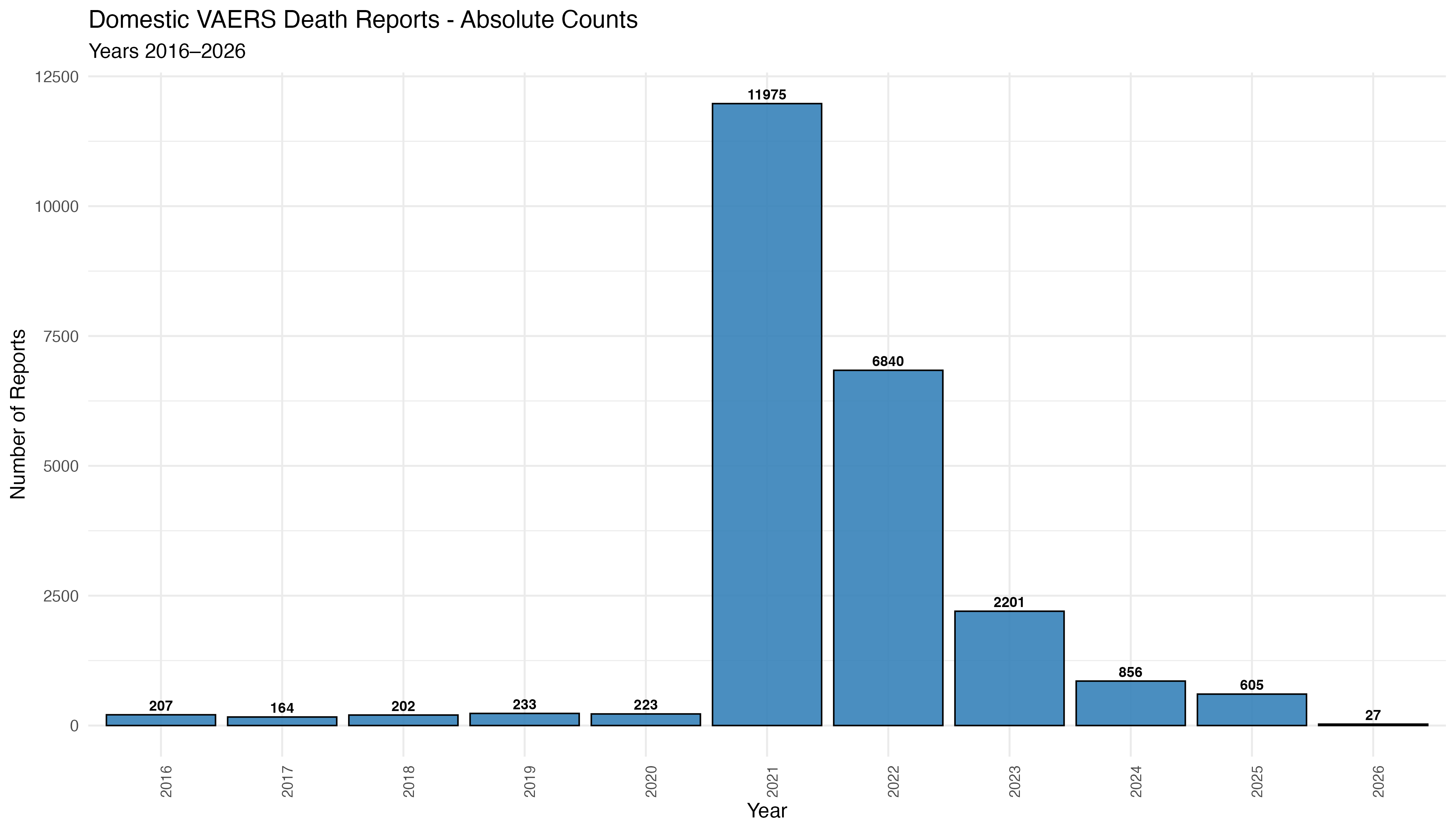
As part of the COVID “countermeasures”, it very clear from pharmacovigilance data that the nucleoside modified RNA-LNP injections lead to millions of injuries deaths world-wide which to this day, are still not acknowledged by the “authorities”. In the U.S. VAERS domestic data alone for 2021, there are over ten thousand deaths reported in the context of the COVID-19 injectable products, and these absolute counts do not consider under-reporting. If one considers the Foreign death reports in VAERS, this number rises to almost 40,000. Again, these are only the reports that were successfully filed to a single pharmacovigilance system.
Worse even, now that the “safe and effective” COVID-19 injectable products that use the nucleoside modified RNA-LNP platform has been green-lighted - in fact forced through the laughable safety checks and balances for the purposes of emergency use due to the “SARS-2 pandemic” - no one intending to use this platform for future injectable products will be required to undergo safety checks via “gold standard” randomized controlled trials (RCTs). In other words, anyone will be able to swap out the spike gene for any gene to produce a new “vaccine” (plug-n-play), and they won’t have to run their new product through any decent clinical trials. And I would bet that even if some form of safety testing is required, the control will be either the Moderna or Pfizer COVID products.
This doesn’t feel like biodefense to me. It sounds like biowarfare on civilians. No one should be threatened with job loss if they don’t allow themselves to be repeatedly injected with an experimental technology for a virus with an infection fatality rate of 0.5678
If anyone would like to defend the “biodefense” idea, please explain to me what exactly is being defended.
Another way to look at this is from the vantage point of thresholds. How much is enough? Development of new synthetics lowers barriers for both bioterrorists, and nowadays, for AIs. With the ability to create/order DNA fragments, assemble “designer” pathogens with enhanced virulence or altered antigenicity, or resurrect ancient strains, without proper regulation, we stand to lose much more than our freedom if this continues under the singular control of what can only be called bioterrorists, in my opinion. Assume the worst, hope for the best.
So what’s the answer? Do we outlaw recombinant technology and synthetic biology development?
The truth of the matter is that I am not fundamentally opposed to synthetic biology. However, because this field carries such profound inherent risks, particularly when its development and application are controlled by clandestine, opaque or unaccountable entities, its continuance does warrant scrutiny. The history of dual-use research demonstrates that without robust transparency and non-conflicted independent oversight, these technologies can be misused with catastrophic consequences. Recombination techniques and synthetic biology need to be safeguarded by open, accountable institutions with strong ethical governance and public scrutiny if they are to continue responsibly, especially in the context of AIs.
You can also ask yourself: What’s worse? Viruses running their course as they always have, or financial-maniac-backed clandestine groups (potentially abusing AIs) making new viruses and “vaccines” that have the potential to wipe us all out all in the name of “public health” whilst calling it biodefense? I, personally, would vote for the former.
Gain-of-function (GOF) research in the most explicit example of the dangers inherent in what some might call biodefense and “scientific progress”. I am not one of those “some”, FYI. GOF research needs to be banned world-wide, in my opinion. “Countermeasures” (gene-based therapies) and the potential for misuse or accidental release of humanized viruses are among just a couple of the potential abuse applications of synthetic biology and recombination techniques. It is important to note that the enabling of humanization of zoonotic viruses complicates and confounds attribution in that synthetic viruses can mimic natural ones exactly. The ultimate whodunnit, eh? Poor pangolins. Thank goodness for endonuclease fingerprints and PRRAR sites to help us suss that out.9
N.B on fear
I thought I would mention that in Baric’s 2007 paper he uses the word “fear” in the very first sentence, and then once more in the introduction in section A. He uses the word “fear” a total of 7 times in this 73 page paper when speaking of viral disease outbreaks and biological warfare.

Interesting that. He’s not wrong. Fear is the ultimate weapon: you can make people do almost anything if you abuse it.
SV40 - past and present
I would like to call your attention now to a quote on page 41 of Baric’s paper where there is mention of SV40 and its role in virology research and synthetic biology.
In the late 1970’s, a simple observation altered the course of virology research globally. Using a small dsDNA virus genome as a model (the Group I polyomavirus SV40) researchers cloned the viral genome into a bacterial plasmid and propagated the viral genome in bacteria. (page 41)
As a result of this work in the 70s, the pSV2 series was developed by Richard Mulligan and Paul Berg in the early 1980s.1011 SV40 was harnessed not for its ability to cause viral infection, but for its compact, powerful regulatory toolkit that reliably functioned across mammalian hosts where bacterial or weak cellular promoters frequently failed.
The SV40 insert typically includes the SV40 origin of replication (ori), the early promoter, the two 72-bp enhancer repeats (the key strong transcriptional enhancer element), and three 21-bp GC-rich repeats to drive efficient transcription, splicing, polyadenylation, and - in some cases - replication of foreign genes (such as the bacterial selectable markers gpt, neo, or DHFR) in a wide range of mammalian cells.
Current published work demonstrates that there are elements of SV40 (promoter/enhancer/ori) in the Pfizer COVID shots.12 In addition, Kevin McKernan specifically wrote on the existence of a dual copy 72-bp SV40 promoter in the Pfizer COVID shots tested.13
The SV40 promoter-ori DNA consists of a 17-bp A-T-rich sequence, three copies of a G-C-rich 21-bp repeat, and two copies of a 72-bp repeat.
The 21-bp GC-rich repeats were also found in the COVID-19 mRNA injectable products by Wang et al. in 2024.14
The reason these SV40 elements are in the Pfizer vials is because of the plasmid Pfizer intentionally selected for manufacturing the nucleoside modified RNA.
Pfizer’s plasmid is a derivative of pcDNA3.1, which is a shuttle vector capable of both bacterial and mammalian replication via SV40 origins of replication, SV40 enhancers, SV40 promoters and SV40 polyA signals. [6]
Pfizer switched from Process 1 (PCR-amplified linear DNA template) used in the original clinical trials to Process 2 (plasmid-based) for commercial-scale manufacturing. In Process 2, the DNA template was produced using this plasmid grown in E. coli. This plasmid is a derivative of the common pcDNA3.1 mammalian expression vector and contains an SV40 promoter/enhancer/origin (ori) cassette. The SV40 promoter-enhancer primarily drives expression of the KanR/NeoR (aminoglycoside phosphotransferase) selectable marker gene. This enables efficient selection of E. coli bacteria that have successfully taken up the plasmid during cloning and large-scale propagation.
However, the SV40 promoter is a eukaryotic (mammalian-active) element and is not required or optimized for driving KanR expression in bacteria; bacterial selection relies on the gene’s functionality in E. coli, often supported by other backbone elements. Thus, the SV40 cassette is “merely” a legacy feature retained from the pcDNA3.1 vector architecture, which was originally designed for mammalian cell expression and selection (where the SV40 promoter is highly effective for the NeoR marker).
These elements serve purely as manufacturing tools and were never intended for administration to humans.
Why did Pfizer choose this plasmid?
Pfizer retained the full standard backbone rather than re-engineering it to remove these potentially harmful elements. Re-engineering it would have required redesigning and rebuilding the entire plasmid backbone, re-cloning the spike gene into the new backbone, and full re-validation of the manufacturing process.
Time and money lost. Can’t let Moderna win; there are stocks to protect!
Think about this.
Pfizer (or their contract manufacturer) deliberately chose a standard pcDNA3.1-type plasmid containing the SV40 promoter-enhancer-ori cassette as the DNA template for their nucleoside-modified mRNA production. While other vector designs without SV40 elements were available - as demonstrated by Moderna - Pfizer opted for the pre-existing commercial backbone. This choice prioritized speed and scalability during the intense race to market. However, it also resulted in residual plasmid DNA (including SV40 sequences) in the final product at high levels. [11,13]15161718 RNA:DNA hybrids, which are known19 [10] by-products of in vitro transcription are resistant to DNase I enzymatic removal, so why was this enzyme selected during the manufacturing process to “clean out” the DNA?20 And why was the final product - containing high levels of DNA - not reported as such? Why were the detection methods for RNA and DNA “cherry-picked”?2122
And if Pfizer simply didn’t want to waste time and money on producing safe products - even if we are to assume that they believed that it wouldn’t become a problem - why was the plasmid disclosed by Pfizer in the Rolling Rapporteur Review by the EMA not annotated properly? In a formal, high-stakes regulatory document like the EMA Rolling Review Report (November 2020), the plasmid should have been properly and fully annotated. The omission of the SV40 promoter/enhancer-ori on the pST4-1525 map and description has yet to be explained properly and it goes without saying that it was not scientifically rigorous by normal publication standards to omit these SV40 components.
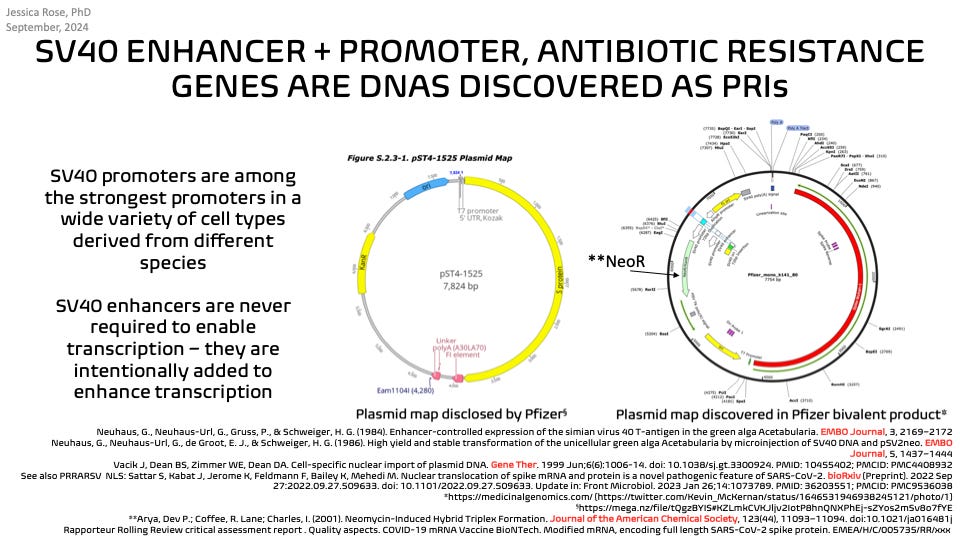
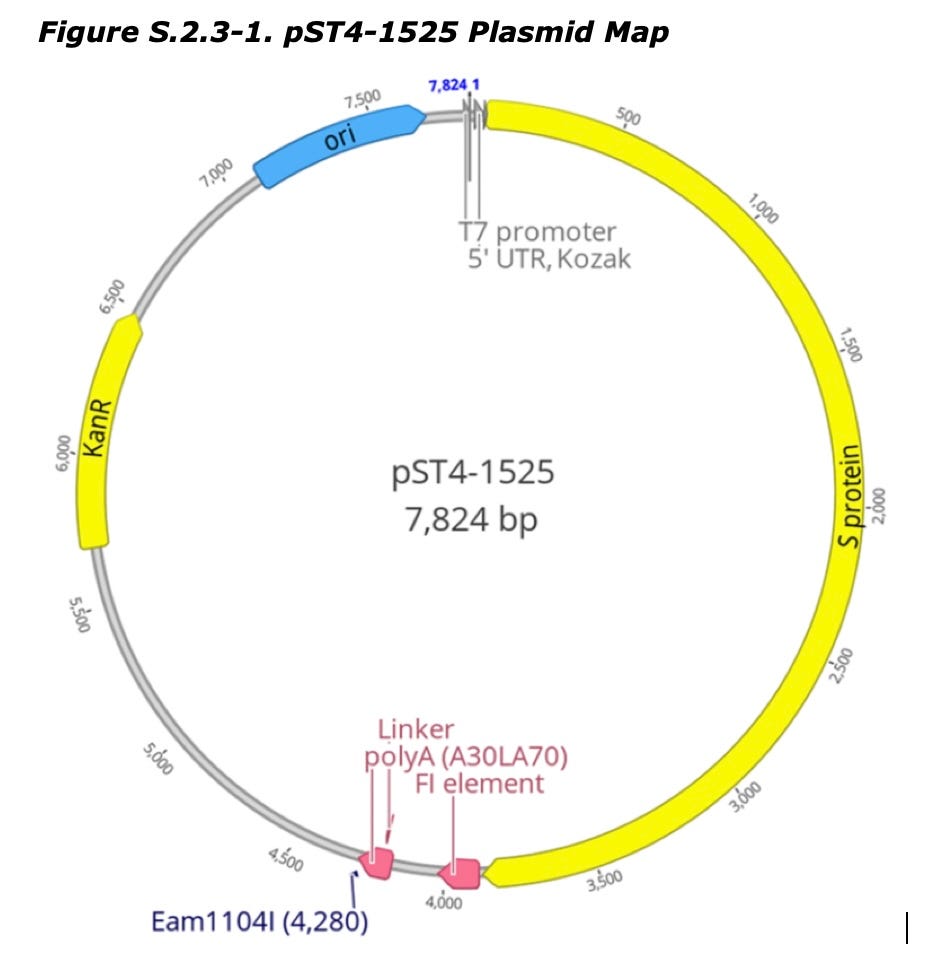
The plasmid map and description should have been fully annotated, with the SV40 region clearly labeled along with all plasmid components, even if they were considered “standard, non-critical vector backbone components”.
In a critical regulatory filing for a product injected into hundreds of millions of people, it is unacceptable by strict scientific standards to not annotate the plasmid map. The fact that the SV40 components were omitted does not simply reflect rushed emergency processes, an over-reliance on “standard vector” assumptions, and a regulatory culture that sometimes prioritizes speed and high-level summaries over exhaustive detail, it reflects fraud because these annotations appear to have been deliberately removed.
Interestingly, according to Grok, the version of the Rapporteur Rolling Review critical assessment report (EMEA/H/C/005735/RR/xxx, dated 19 November 2020) that contains Figure S.2.3-1 - pST4-1525 Plasmid Map - is part of internal/leaked rolling review documents from an EMA cyber incident,23 and for this reason, is unobtainable for download online. Really. REALLY?
Good thing I saved it before they did the scrub down. Here. You can have it too.

Again, these plasmids or their component parts were never intended for direct administration to humans. Even a lone SV40 promoter fragment is like a powerful car accelerator pedal floating around without an engine - mostly harmless on its own, but if it accidentally wires itself into your DNA dashboard in the wrong spot, it could rev the wrong genes and potentially contribute to problems like uncontrolled cell growth (aka: cancer). And I don’t have to remind anyone that these products were injected several times in some cases, into billions of people. How many genes have been revved wrong?
Final thoughts
The convergence of Ralph Baric’s detailed roadmap for synthetic coronavirus assembly,24 the documented presence of residual plasmid DNA containing the SV40 promoter-enhancer-origin cassette in Pfizer’s mRNA product, and the unprecedented regulatory shortcuts and omissions surrounding its manufacture raise profound and unanswered questions about the true nature of the COVID-19 response. What was presented as biodefense and pandemic preparedness appears, in critical aspects, to have functioned as an exercise in biowarfare - directed not by a virus, but by human decisions that prioritized speed, profit, and platform expansion over rigorous safety, transparency, and informed consent.
The insertion of powerful mammalian regulatory elements never intended for human administration, combined with the removal of normal clinical trial requirements for future plug-and-play products, demands immediate, independent and transparent investigation. Until these issues are rigorously examined - without institutional protection or narrative control - public trust cannot be restored, and the risks of synthetic biology will continue to outweigh any promised benefits.
Nature abhors both a vacuum and reckless synthetic manipulation.
The time for accountability is NOW.
Baric RS. 2006. Synthetic Viral Genomics. In: Working Papers for Synthetic Genomics: Risks and Benefits for Science and Society, pp. 35-81. Garfinkel MS, Endy D, Epstein GL, Friedman RM, editors. 2007
Yount B, Curtis KM, Baric RS. Systematic assembly and genetic manipulation of the mouse hepatitis virus A59 genome using No See’m technology. J Virol. 2002;76(21):11065-11078. doi:10.1128/JVI.76.21.11065-11078.2002
Yount B, Curtis KM, Fritz EA, et al. Reverse genetics with a full-length infectious cDNA of severe acute respiratory syndrome coronavirus. Proc Natl Acad Sci U S A. 2003;100(22):12995-13000. doi:10.1073/pnas.1735582100
This is just ONE example of how withholding appropriate antibiotic treatment to prevent secondary pneumonias in the elderly will lead to death. https://www.cebm.net/covid-19/rapidly-managing-pneumonia-in-older-people-during-a-pandemic/ Published March 16, 2020
Ioannidis JPA, Axfors C, Contopoulos-Ioannidis DG. Population-level COVID-19 mortality risk for non-elderly individuals overall and for non-elderly individuals without underlying diseases in pandemic epicenters. Environ Res. 2020;191:110069. doi:10.1016/j.envres.2020.110069
Ioannidis JPA. Infection fatality rate of COVID-19 inferred from seroprevalence data. Bull World Health Organ. 2021;99(1):19-33F. doi:10.2471/BLT.20.265892
Pastor-Barriuso R, Pérez-Gómez B, Hernán MA, et al; ENE-COVID Study Group. Infection fatality risk for SARS-CoV-2 in community dwelling population of Spain: nationwide seroepidemiological study. BMJ. 2020;371:m4509. doi:10.1136/bmj.m4509
Seedat, S., Chemaitelly, H., Ayoub, H.H. et al. SARS-CoV-2 infection hospitalization, severity, criticality, and fatality rates in Qatar. Sci Rep 11, 18182 (2021). https://doi.org/10.1038/s41598-021-97606-8
Bruttel, V., Washburne, A.D., & VanDongen, A.M. (2023). Endonuclease fingerprint indicates a synthetic origin of SARS-CoV-2. bioRxiv.
Mulligan RC, Berg P. Expression of a bacterial gene in mammalian cells. Science. 1980;209(4463):1422-1427. doi:10.1126/science.6251549
Mulligan RC, Berg P. Selection for animal cells that express the Escherichia coli gene for xanthine-guanine phosphoribosyltransferase. Proc Natl Acad Sci U S A. 1981;78(4):2072-2076. doi:10.1073/pnas.78.4.2072
Speicher DJ, Rose J, McKernan K. Quantification of residual plasmid DNA and SV40 promoter-enhancer sequences in Pfizer/BioNTech and Moderna modRNA COVID-19 vaccines from Ontario, Canada. Autoimmunity. 2025;58(1):2551517. doi:10.1080/08916934.2025.2551517
Wang TJ, Kim A, Kim K. A rapid detection method of replication-competent plasmid DNA from COVID-19 mRNA vaccines for quality control. Journal of High School Science. 2024;8(4):427-439. doi:10.64336/001c.127890
König B, Kirchner JO. Methodological considerations regarding the quantification of DNA impurities in the COVID-19 mRNA vaccine Comirnaty®. Methods Protoc. 2024;7(3):41. doi:10.3390/mps7030041 (PMC11130870)
Kämmerer U, Schulz V, Steger K. BioNTech RNA-Based COVID-19 Injections Contain Large Amounts Of Residual DNA Including An SV40 Promoter/Enhancer Sequence. Science, Public Health Policy, and the Law. 2024
Raoult D. Confirmation of the presence of vaccine DNA in the Pfizer anti-COVID-19 vaccine. HAL (preprint-to-publication track). 2024. Available at: https://hal.science/hal-04778576
Roncati L. pDNA Impurities in mRNA Vaccines. Microorganisms. 2025;13(9):1975. doi:10.3390/microorganisms13091975
Sutton DH, Conn GL, Brown T, Lane AN. The dependence of DNase I activity on the conformation of oligodeoxynucleotides. Biochem J. 1997;321(Pt 2):481-486. doi:10.1042/bj3210481
McKernan K, Rixey C, Rose J. RNA:DNA hybrids survive digestion in mRNA vaccine manufacturing. Journal of Independent Medicine. 2026;2(1):31-46. doi:10.71189/JIM/2026/V02N01A04
Tinari S. The EMA covid-19 data leak, and what it tells us about mRNA instability. BMJ. 2021;372:n627. doi:10.1136/bmj.n627
Cockrell AS, Beall AE, Yount B, Baric RS. Efficient reverse genetic systems for rapid genetic manipulation of emergent and preemergent infectious coronaviruses. Methods Mol Biol. 2017;1581:59-81. doi:10.1007/978-1-4939-6964-7_5